Test your market
before it exists.
Simulate people, decisions, and outcomes before reality catches up. Echo creates a living digital twin of your market — so you can test strategy, pricing, products, and narratives before a single dollar is spent.


TRUSTED BY LEADING BRANDS WORLDWIDE


Can we raise the price of this snack multipack by 12% without losing value shoppers?
For this all-in-one serum launch, should we put more budget into Meta, YouTube creators, or email?
Are we losing more buyers at the menu board, checkout, or second purchase?
For a new functional beverage, which formula is more likely to drive both trial and repeat — energy-focused or wellness-led?
If a rival launches a cheaper private-label version, which of our buyers are most likely to switch?
For a new high-protein snack, which audience is more likely to convert first — urban millennials or fitness-focused Gen Z?
Can we raise the price of this snack multipack by 12% without losing value shoppers?
For this all-in-one serum launch, should we put more budget into Meta, YouTube creators, or email?
Are we losing more buyers at the menu board, checkout, or second purchase?
For a new functional beverage, which formula is more likely to drive both trial and repeat — energy-focused or wellness-led?
If a rival launches a cheaper private-label version, which of our buyers are most likely to switch?
For a new high-protein snack, which audience is more likely to convert first — urban millennials or fitness-focused Gen Z?
Real impact from
synthetic intelligence.
See how leading companies use Echo to transform their market intelligence.
Increase in campaign engagement
Global Beverage Company · Consumption Behavior Simulation
Increase in campaign engagement. Used Echo to understand consumption contexts, uncover occasion drivers, and optimize message and channel resonance across key markets — without a single live survey.

Use Cases & Applications
One engine. Multiple research settings.
Unlimited reruns.
Echo helps surface white-space opportunities, accelerate innovation, and create lasting differentiation at every customer touchpoint.

Market Research
Run virtual surveys, focus groups, and 1-on-1 interviews with thousands of synthetic personas — in days, not months.

Trend prediction
Model future market shifts, sentiment changes, and purchase behaviors before they occur — with zero real-world risk.

New product development
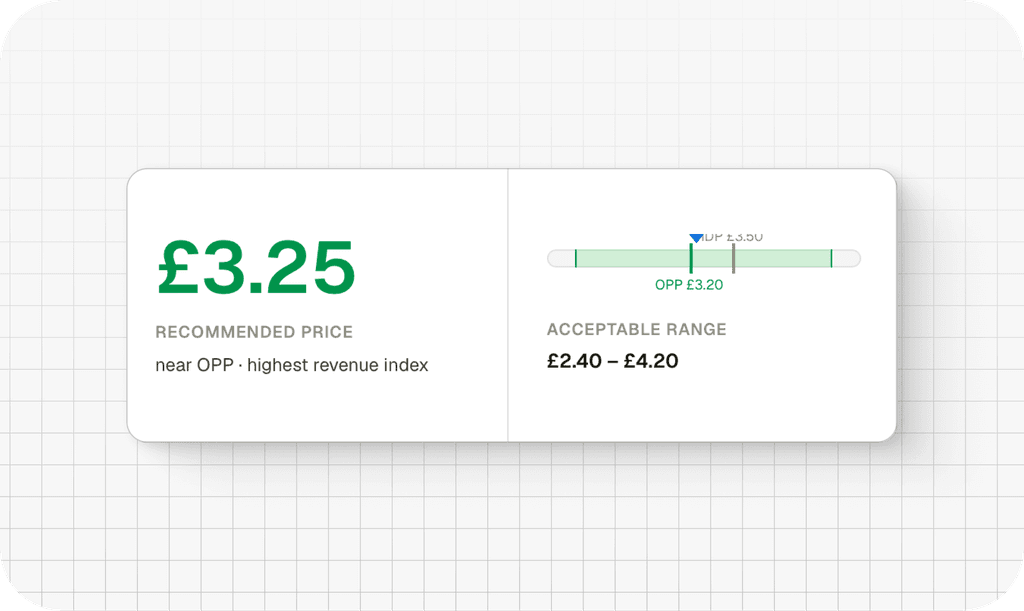
Test concepts, messaging, and pricing against AI personas calibrated to your exact customer segments before launch.

Pre-launch campaign testing
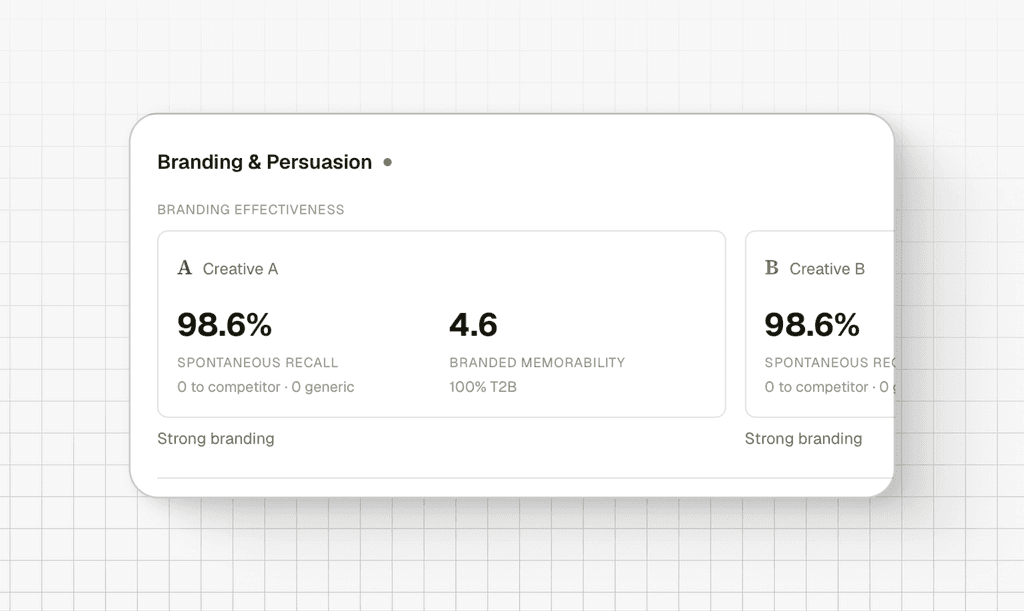
Pressure-test 100+ campaign variations across demographics to identify top performers before you spend on media.

Customer journey simulation
Model how different personas navigate touchpoints and uncover hidden drop-off points in your funnel — under different conditions.

Competitive response modeling
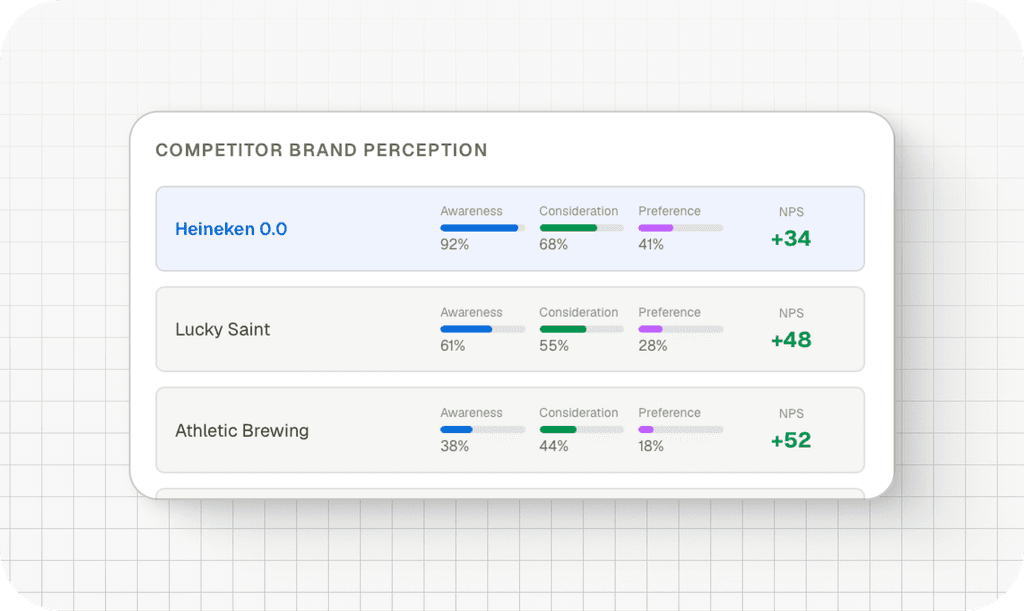
Simulate how consumers react to competitor moves. Anticipate market shifts and dominate your launch window.
From Data to Personas
Turn customer and market data into rich, representative personas
Data Foundations
CRM / CDP
Loyalty & Transactions
External Data (Census, Open Data)
Real-world signals about customers and markets
Segments
Behavioral groups
Demographic clusters
Value-based segments
Structured view of the population & segment sizes
Distributions
Age
Income
Behaviors
Preferences
Realistic attribute distributions within each segment
Personas
Demographics
Behaviors & motivations
Needs & context
Humanized, research-based representations of each segment
"Humans are unreliable narrators of their own behavior. Memory is imperfect, incentives distort responses, and social pressure reshapes answers. Echo removes the human bottleneck from insight generation."
The Problem
You're deciding for tomorrow
using yesterday's data.
Traditional research is slow, shallow, and fundamentally limited in how it captures real behavior.
Too slow & expensive
Surveys take 6–12 weeks and $50K–$500K per study. By the time insights land, the window has closed.
Surface-level insights only
Static formats capture stated preferences — not the deeper behavioral intent behind choices.
Respondent fatigue & bias
Burnout leads to drop-offs, social desirability bias, and disengagement — reducing signal quality.
You can't survey a future that hasn't happened
New products, categories, and competitive scenarios demand imagination — not memory.
Integrate
First-party, third-party, and historical signals shape the market twin.
The Science Behind Echo
A market twin, not a panel.
Echo combines the rigor of traditional research with the speed and scale of AI — going beyond both survey-based methods and generic LLM responses.
Synthetic consumers
Each synthetic consumer is built from a structured profile — demographics, behaviors, values, and technographics.

Agentic decision loop
In every scenario, each synthetic consumer runs an agentic loop to form a viewpoint and make a decision — the same way a real consumer would.
Behavior emerges. It is not prompted.
Each persona has memory and context, responds to stimuli and environment, is influenced by other personas, and evolves over time.

The Problem
You're deciding for tomorrow
using yesterday's data.
Traditional research is slow, shallow, and fundamentally limited in how it captures real behavior.
Your audiences — not generic panels
Echo builds personas from your actual CDP, CRM, or loyalty data. Simulations reflect how your customers actually think.
Others use census averages or generic panels. Echo uses your data.
Simulate segments you don't have yet
Echo can also construct personas outside your current customer base — the competitor's buyer, the Gen Z shopper you haven't reached.
Others only simulate who you already know. Echo simulates who you want.
Real-world what-ifs, not just surveys
Echo simulates decisions in context — a price change, a competitive launch, a supply disruption. Personas respond to scenarios.
Others run structured surveys. Echo runs scenario models.
Scenario Canvas
Every decision. Before it's real.
The questions that matter most are the ones hardest to ask in the real world. Echo makes them testable.
New category
How will customers react to something they've never seen before?
New geography
What changes when the same offer enters a new market?
New competitor
What happens when a disruptive rival rewrites your category?
Hard-to-reach audience
How does your message land with populations no one can recruit?
New regulation
How do behaviors shift when rules and incentives change overnight?
New Category
How will customers react to something they've never seen before?
Platform Capabilities
Everything you need to
simulate with confidence.
Synthetic consumer modeling
Generate virtual consumers and micro-segments grounded in behavioral science and your own first-party data.
Scenario testing
Create virtual environments where agents shop, react, and decide under realistic constraints.
Interactive research modes
Run simulations as focus groups, 1-on-1 interviews, or journey walkthroughs.
Real-time insight generation
Turn simulation output into decision-ready signals: what wins, what fails, and the explainable "why."
Feedback loops
Rerun experiments with targeted adjustments to narrow uncertainty quickly.
Synthetic reviews & focus groups
Generate review-style feedback, spin up multiple panels — without fatigue or recruiting limits.
FAQ
Questions people actually ask
Echo grounds its simulations in structured profiles built from real-world datasets and behavioral science. Each synthetic consumer is defined by attributes such as demographics, preferences, interests, Big Five traits, memory, and decision-making patterns, then responds within a specific scenario rather than as a one-off generated answer. That structure is what makes the outputs more consistent, explainable, and commercially relevant than generic AI responses.
Echo is best understood as a research acceleration layer. It helps teams narrow uncertainty earlier, test more scenarios, and identify which questions deserve deeper validation before they commit time and budget to fieldwork or live experiments. The scientific advantage is not that it removes judgment; it is that it makes hypothesis testing faster, cheaper, and more iterative.
Echo starts by translating a business question into a modeled scenario: a price change, a new product, a campaign, a promotion, or a competitive move. It then generates synthetic consumers with structured attributes and decision logic, places them into that scenario, and observes how those individual choices aggregate into market-level signals such as likely winners, segment shifts, and behavioral drivers.
Echo is calibrated using a mix of first-party and external signals. That can include CRM, CDP, loyalty, transaction, and other real-world datasets, which are used to define segments, attribute distributions, and behavioral patterns. The result is not a generic synthetic audience, but a market model anchored in the shape of your category, your customers, and the environment they operate in.
Yes. Echo can model both observed customers and adjacent audiences that are strategically important but underrepresented in your current data — for example, a new segment, a new geography, or a competitor's likely buyer.
Surveys and panels are designed to collect stated responses. A/B tests measure behavior once something is already in market. Echo sits earlier in the decision cycle: it uses simulation to test multiple 'what if' conditions before launch, at much higher speed, with the ability to rerun the same question under different assumptions.
Simulate your first market decision in 2 weeks.
Start with an Echo pilot — your data, your personas, your questions. No generic panels, no six-week wait.